


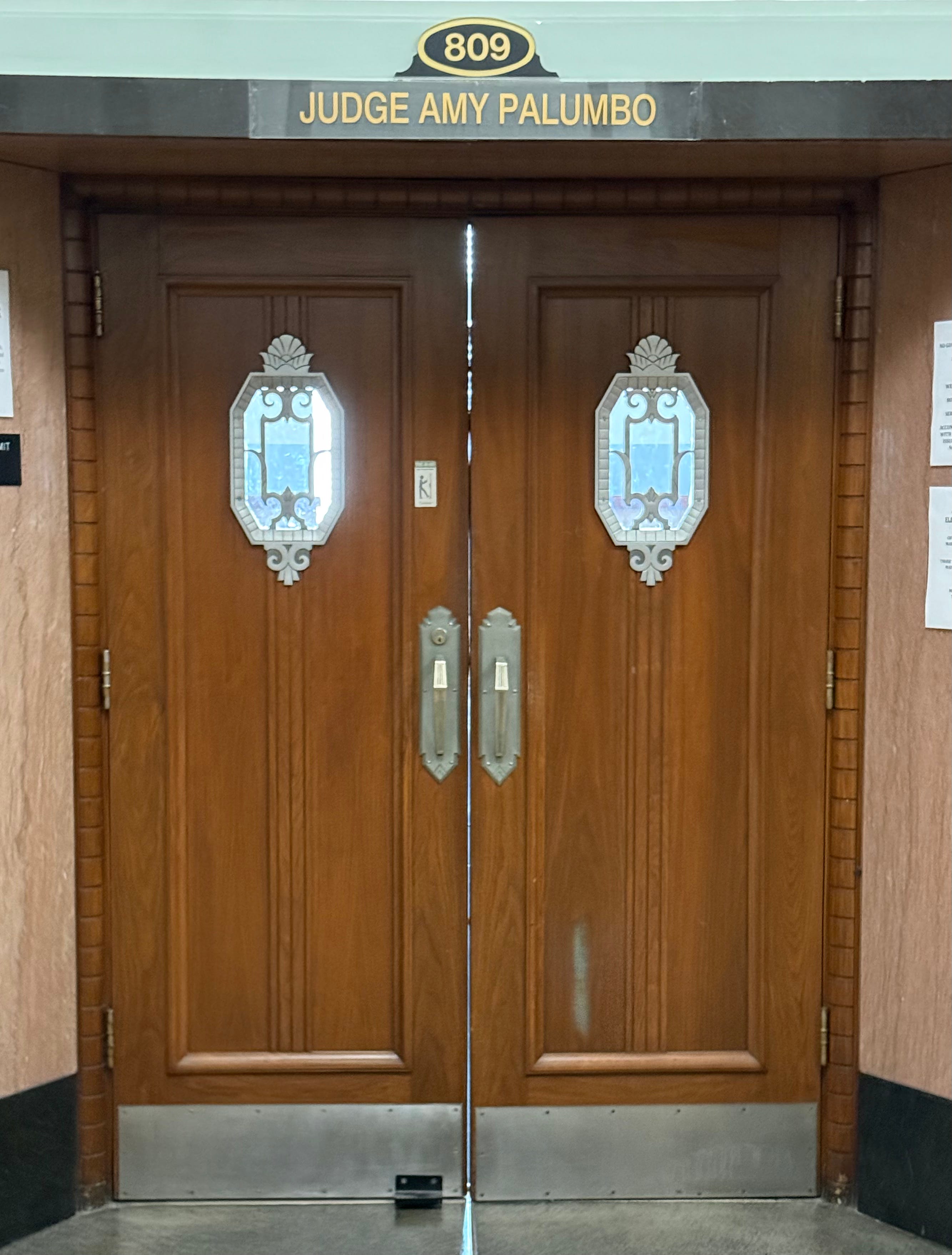
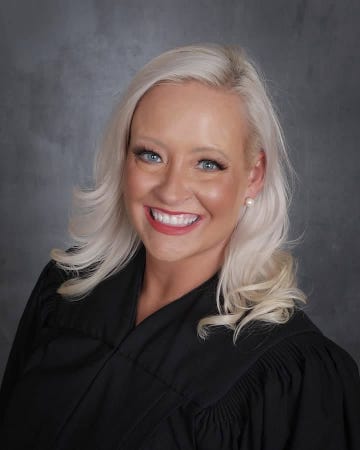
On Monday, a hearing in the Hursh case, a hail damage roof lawsuit that has become symbolic of 1,000 similar cases across Oklahoma, alleging bad faith claims practices against State Farm, took a dramatic turn. Oklahoma County District Court Judge Amy Palumbo ruled that a mysterious document referred to in court filings as Exhibit 133, should be made public, prompting lawyers for the insurance giant to suddenly move for Palumbo’s recusal.
State Farm’s abrupt request to remove a judge who has been presiding over the Hursh case for more than a year, and who has previously denied numerous State Farm motions on document releases, comes just six weeks before the Hursh trial is set to begin Dec. 7.
Leaving the courtroom, three State Farm attorneys refused comment on the proceeding.
Hursh attorney Hannah Whitten, who argued the case alongside retired judge Michael Burrage, both of the Oklahoma City law firm Whitten Burrage, which represents more than 900 Oklahoma policyholders in cases against State Farm, refused to discuss materials still under protective order. However, Whitten revealed that Monday’s hearing had resolved just one of five motions on the day’s docket, and indicated that what transpired may alter the schedule of hearings to come.
“We heard one brief, whereafter State Farm asked the court to recuse,” Whitten said. “Once they file a written motion, everything will go on a kind of stay for right now.”
Whitten said that State Farm did not have a valid ground upon which to base their request for Palumbo’s recusal. She described the sequence of events in the closed courtroom.
“[Palumbo] ruled that Exhibit 133 is not privileged as it is not attorney-client work product in anticipation of litigation, and is an ordinary business document,” Whitten said, adding that Palumbo’s ruling meant the document was now public.
At that, Whitten said, State Farm attorney Lance Leffel, of Oklahoma City law firm GabelGotwals, moved to recuse Palumbo.
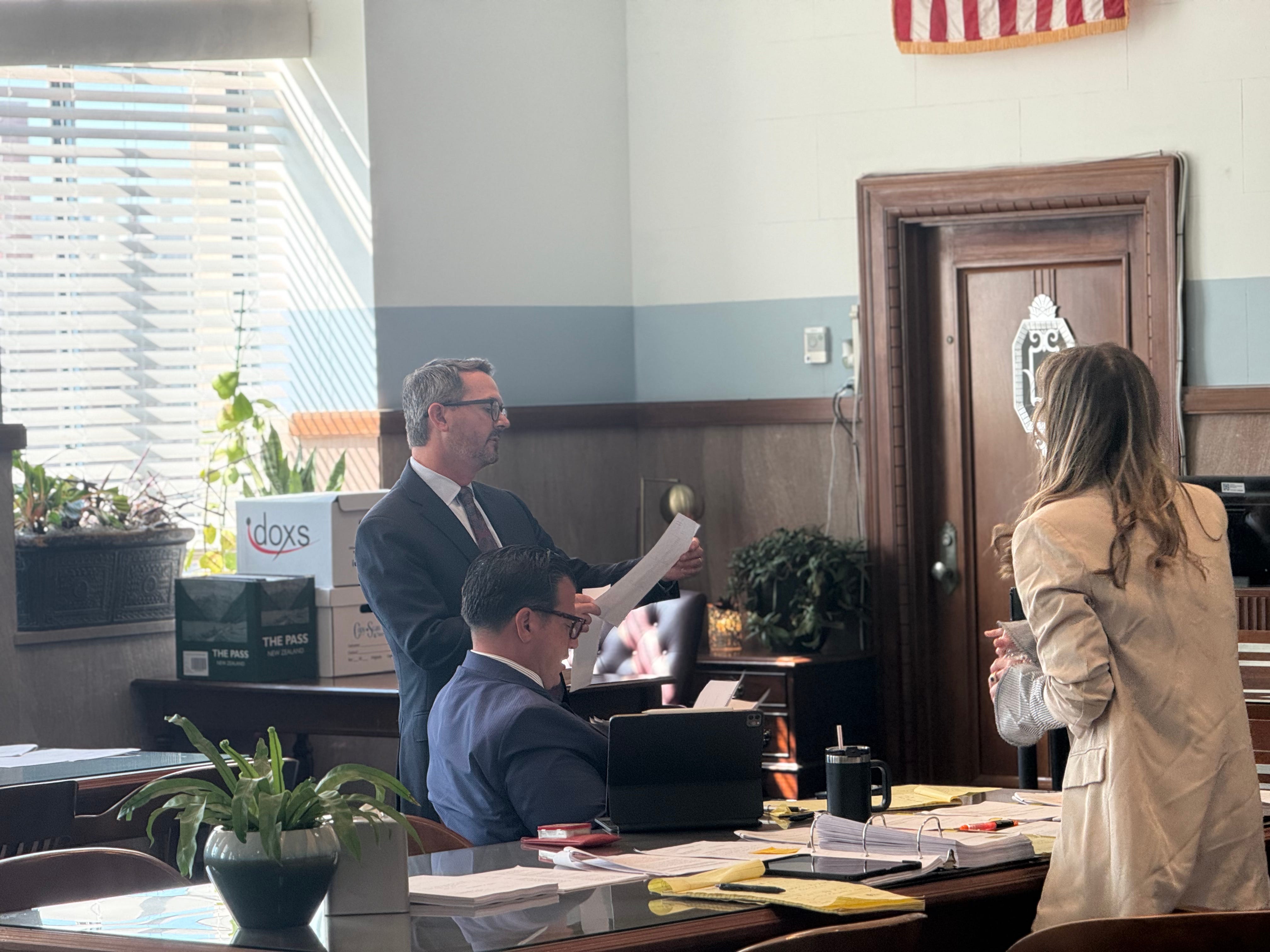
Plaintiffs immediately replied, Whitten said, arguing that the motion to remove the judge was clearly a delaying tactic. If the company believed that losing discovery orders was a valid basis for recusal, Whitten said she told Palumbo, they could have raised it in more cases than just this one, and should have done so far earlier than a date six weeks prior to the scheduled start a trial that is of interest to thousands of Oklahoma homeowners.
Outside the courtroom, Whitten reiterated for reporters that State Farm’s motion was a direct consequence of the release of Exhibit 133.
“We lose discovery orders all the time, but we don’t move to recuse those judges,” Whitten said.
Striken to Be Reset
Monday’s hearing was strange from the get go.
Palumbo began with an announcement that several media outlets had contacted her chambers with requests for access to the upcoming trial. The judge reiterated her belief in maintaining public access to public proceedings, but then, despite insistence from both sides that protected documents would be discussed openly on only one of five motions before the court, Palumbo cleared the courtroom of all media.
The proceeding’s digital record indicated that four of Monday’s motions, including an effort to compel State Farm to repair or replace thousands of pages discovery materials with scrubbed metadata — that is, documents tampered with before being delivered — were “stricken to be reset.”
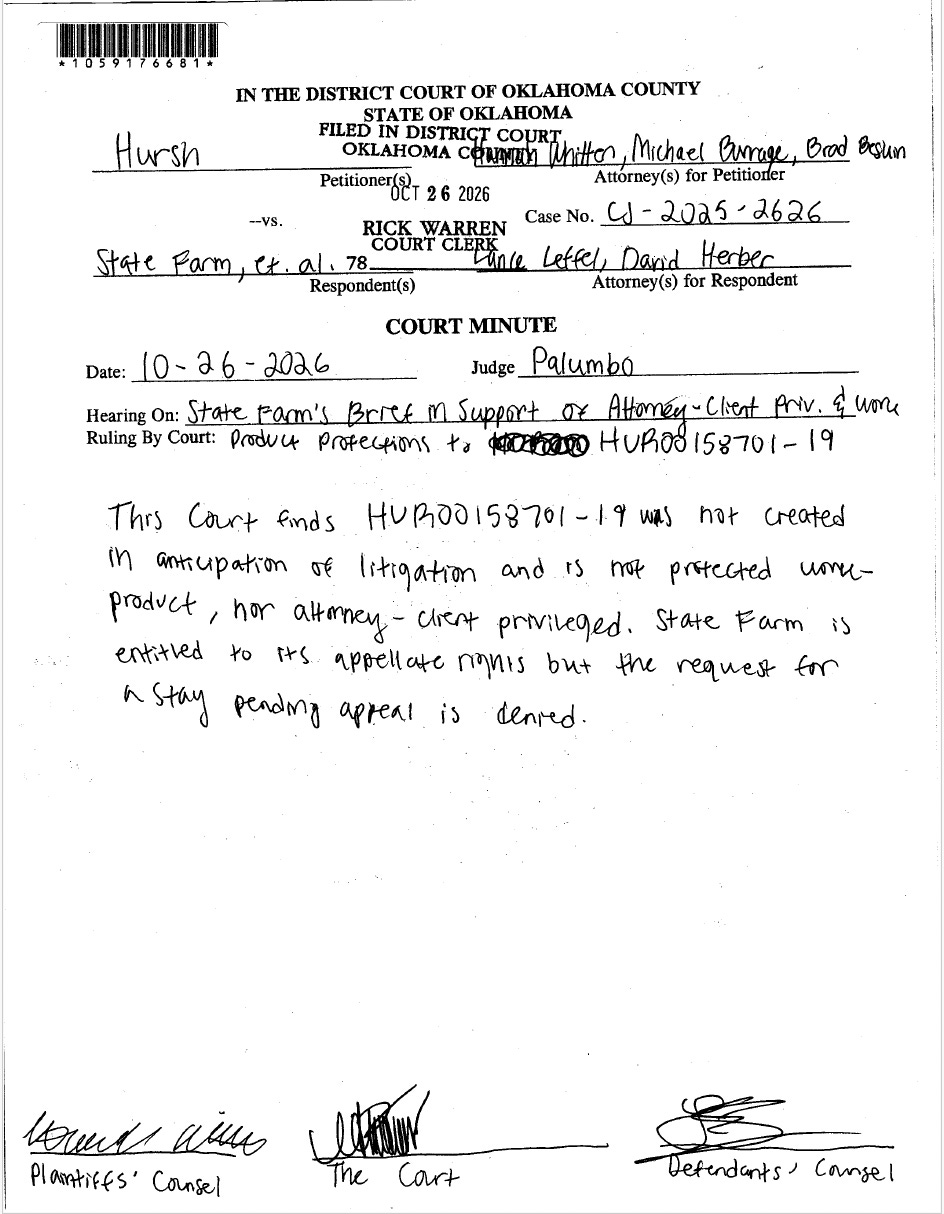
A handwritten order recorded Palumbo’s release of Exhibit 133.
“This Court finds HUR00158701-19 was not created in anticipation of litigation and is not protected work-product, nor attorney-client privileged,” the hastily scribbled court minute reads. “State Farm is entitled to its appellate rights but the request for a stay pending appeal is denied.”
Caution Should Be Exercised Here
Exhibit 133 — relabeled Exhibit 3 in a motion filed Tuesday — is a draft of an internal State Farm document titled P&C Claims|Fire Claims Roofs – Quality & Service, and dated Oct. 26, 2021, that is, five years to the day before Monday’s hearing.
Included with the document are various emails indicating that an individual named Scott Welsh, whom separate documents reveal to be a claims executive, had been given access to an early draft of P&C Claims and was now returning the document with concerns and suggested edits from himself and others.
An Oct. 5 motion from State Farm argued that Welsh shared the document with attorneys, but the document indicates no author of the edits other than Welsh. Rather than provide legal opinion, the edits appear to cite the need for legal review.
Regardless, Welsh’s edits and suggestions, and the content and recipients of his emails, make clear that numerous State Farm executives were aware that their Wind/Hail initiative — known by a variety of names, document to document — was creating a widespread impression that the company was seeking to bilk its policyholders.
Sometimes, Welsh’s edits are subtle, as when, throughout the document, he replaces the word “tactics” with terms like “action items” and “plans” and “work” for the practices that State Farm has put in place to increase “quality,” that is, reduction of indemnity payouts. Presumably, Welsh’s goal in removing “tactics” is to mute the impression that State Farm sees itself as waging some kind of battle against its insureds.
However, Welsh himself appears to cite an ongoing struggle with an unseen enemy. In a passage describing the launch of the Wind/Hail Initiative, Welsh expresses concern that a tactic calling for denials of total roof replacements in cases of small hail events was giving the impression that the company is intentionally denying valid claims.
“Caution should be exercised here,” Welsh says, in bracketed in-line commentary. “Our adversaries could say this places pressure on our front line claim reps to not replace a roof.”
In other words, he’s worried that the document makes it too easy for trial attorneys to conclude that State Farm is cheating policyholders.
Welsh is similarly concerned that parts of P&C Claims come off as cocky and braggadocious. A passage that lists dramatic increases of claims being entirely denied — that is, policyholders with roof damage having their claims closed without payment (CWP) — strikes him as too giddy and gleeful. He advises falling back on a more neutered term: accuracy.
“Does this [list] suggest that CWP is a positive — that we consider this improvement?” Welsh asks. “A higher CWP should be considered evidence of greater accuracy — the implication is that we are intentionally reducing indemnity dollars and celebrating greater numbers of CWP.”
That is, they are cheering when their insureds are denied coverage.
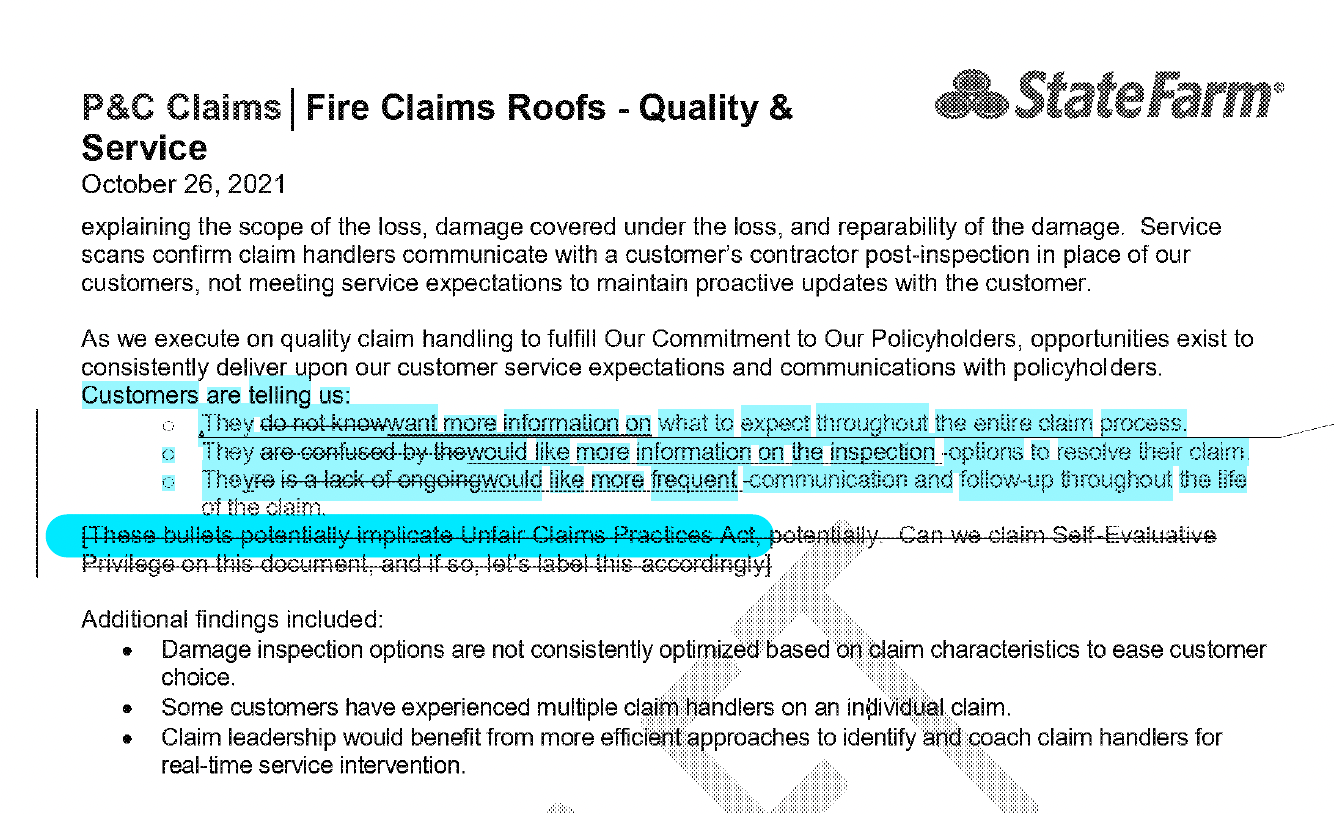
Perhaps the most clearly damning thing in P&C Claims — the thing that explains why State Farm would fall back on snippy final-hour legal horseplay — is Welsh’s acknowledgement that a particular bullet-pointed list of customer concerns may indicate that State Farm is knowingly breaking the law. He advises the company to take steps to ensure that P&C Claims never enters the public domain.
Prior to Welsh’s edits, P&C Claims lists customer concerns as follows:
They do not know what to expect throughout the entire claim process.
They are confused by the options to resolve their claim.
There is a lack of ongoing communication and follow-up throughout the life of the claim.
After significant editing, Welsh remains concerned that the bullet points reveal illegal behavior.
“These bullets potentially implicate Unfair Claims Practices Act, potentially,” he writes.
Then Welsh asks whether the document — not just the bullets, but the entirety of P&C Claims should be marked in such a way as to invoke a legal provision that would prevent it from becoming public.
“Can we claim Self-Evaluative Privilege on this document, and if so, let’s label this accordingly,” he writes.
Scott Welsh did not respond to an email query as to whether his suggestions and edits were incorporated into the final draft of P&C Claims.
They Knew Their Tactics Were Wrong
The motion filed Tuesday, in the Hursh case’s sister litigation, the West case in Comanche County, included P&C Claims as Exhibit 3 — formerly Exhibit 133 — and called on the document to provide rationale for why State Farm CEO Jon Farney should at last be deposed in regard to Oklahoma’s ongoing roof claim saga.
Farney’s deposition has been ordered and delayed several times.
“State Farm leadership was circulating [P&C Claims] admitting that its tactics implicate improper reductions of indemnity and potential Unfair Claims Settlement Practices Act violations,” read the petition signed by Whitten Burrage attorney Reggie Whitten. “It shows State Farm knew its tactics were wrong.”
Reached for comment, Reggie Whitten said that State Farm might be able to slow down the Hursh case, but the West case in Lawton, now scheduled to begin trial Feb. 1, would continue.
“State Farm only moved to recuse Palumbo because she ruled against them,” Reggie Whitten said. “They can try to delay this all they want, but we’re going to get to trial — and then the whole world is going to get to see.”
Hannah Whitten remained sanguine on the prospects of the Hursh trial coming before the West trial.
“Our hope is that the recusal issue will be dealt with expeditiously to prevent a trial delay,” Hannah Whitten said.